
Case Studies in Longevity: How High-End Furniture Performs Over Decades
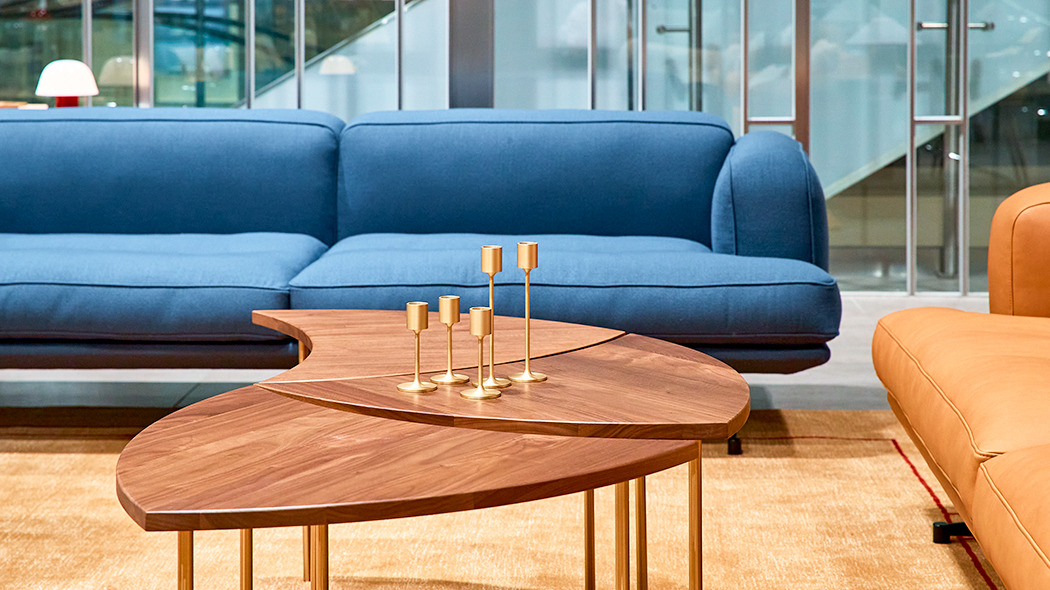
Understanding furniture longevity requires more than theoretical knowledge or showroom impressions—it demands observation of real-world use across years and decades. In professional residential consulting, long-term case studies consistently reveal that true furniture performance is determined by material integrity, construction logic, maintenance discipline, and design foresight. Patterns observed across high-end residential projects demonstrate that longevity is not accidental; it is engineered, maintained, and strategically planned from the moment of selection. For new homeowners, these real-world examples provide concrete guidance that bridges the gap between expectation and reality.
Long-Term Observation as the Measure of Quality
Furniture longevity cannot be accurately assessed at the point of purchase. Early comfort, visual appeal, and brand reputation provide limited insight into how a piece will behave after years of daily use, environmental exposure, and lifestyle change. Only extended observation reveals how materials compress, joints respond to stress, finishes age, and upholstery adapts to repeated contact. In professional practice, longitudinal evaluation—tracking furniture performance over ten, fifteen, or twenty years—offers the most reliable framework for understanding value. These observations consistently show that high-end furniture does not resist time; it accommodates it.
Case Study 1: Solid Walnut Sofa (2007–2025)
In 2007, a first-time homeowner invested in a solid walnut sofa with mortise-and-tenon joinery and full-grain aniline leather upholstery. The sofa was placed in a primary living space and subjected to heavy daily use, averaging four to five hours per day. Over fifteen years, the walnut frame exhibited no structural deformation, joint loosening, or load instability. The wood developed subtle patina, reinforcing rather than diminishing visual authority.
At year twelve, the sofa underwent a complete reupholstery cycle. The original leather, while still intact, had softened significantly and developed visible wear consistent with natural aging. Reupholstery restored surface uniformity without altering comfort, as the internal cushioning and spring systems remained structurally sound. Minor refinishing of exposed walnut elements addressed surface wear without requiring material replacement. This case demonstrates that when frame integrity and joinery quality are prioritized, upholstery renewal becomes an enhancement rather than a rescue intervention.
Case Study 2: Oak Dining Set (2010–2025)
An oak dining set installed in a suburban luxury residence in 2010 offers insight into how environmental factors influence longevity. The table and chairs were exposed to regular daily meals, frequent gatherings, seasonal humidity fluctuations, and occasional liquid spills. The set featured a solid oak frame with high-quality veneer panels engineered for dimensional stability.
Over fifteen years, the owners adhered to a disciplined maintenance routine: periodic surface conditioning, prompt spill management, and humidity regulation during extreme seasonal changes. Minor veneer edge repairs were conducted proactively, preventing moisture intrusion and delamination. By 2025, the dining set retained full structural integrity and a visually commanding presence. Chair joints remained stable, seat comfort consistent, and surface finishes intact. Comparable lower-grade dining sets in similar households required full replacement every six to eight years, underscoring the impact of material quality and maintenance discipline.
Case Study 3: Modular Lounge System (2012–2025)
A modular lounge system purchased in 2012 illustrates the role of design adaptability in extending lifespan. The system was composed of interchangeable seating modules supported by a reinforced internal frame and standardized attachment mechanisms. Over time, high-use modules experienced accelerated cushion compression relative to less-used sections.
Rather than replacing the entire system, the homeowner replaced only the affected modules and refreshed upholstery selectively. This modular strategy extended the functional life of the system while preserving visual consistency and ergonomic performance. By 2025, the lounge system remained in active use with minimal overall replacement cost. This case confirms that modularity and repairability significantly enhance long-term value by isolating wear rather than allowing it to dictate total replacement.
Patterns Revealed Through Long-Term Use
Across multiple projects, consistent patterns emerge. Solid wood frames outperform composite structures under repeated stress. High-quality joinery resists deformation and noise over time. Premium upholstery materials age visibly but gracefully, while low-grade alternatives degrade unpredictably. Furniture designed with serviceability—replaceable cushions, accessible hardware, modular components—retains usability far beyond industry averages.
Environmental exposure further amplifies these differences. Furniture that accommodates humidity, temperature variation, and daily interaction without structural compromise demonstrates true resilience. These characteristics are rarely visible at purchase but become decisive over time.
Maintenance as a Longevity Multiplier
Long-term case studies confirm that maintenance is not a secondary consideration—it is a multiplier of initial quality. Even the finest materials deteriorate prematurely without appropriate care. Conversely, disciplined maintenance significantly extends lifespan and preserves performance. Semi-annual inspections, periodic refinishing, cushion rotation, and hardware tightening consistently prevent minor issues from escalating into irreversible damage.
Homeowners who integrate maintenance planning at the time of purchase report higher satisfaction and lower cumulative costs. Maintenance transforms furniture ownership from reactive replacement to proactive stewardship.
Insights for New Homeowners
Real-world performance data yields actionable insights for first-time homeowners. Anchor pieces such as sofas, dining tables, and beds should prioritize solid wood frames and premium upholstery. Joinery must be engineered for repeated stress rather than assembly efficiency. Maintenance cycles should be anticipated, not deferred. Modular and repairable designs offer resilience against lifestyle change and uneven wear.
Perhaps most importantly, longevity should be evaluated as a system rather than a single attribute. Material selection, construction logic, design adaptability, and care routines operate together. Weakness in any one area compromises overall performance.
Emotional and Financial Outcomes
Long-lasting furniture fosters emotional continuity. Homeowners develop attachment to pieces that accompany life stages rather than being replaced by necessity. Financially, extended replacement cycles reduce cumulative expenditure and disposal costs. Over fifteen to twenty years, high-end furniture that supports renewal consistently outperforms lower-cost alternatives in total ownership value.
Conclusion
Real-life case studies confirm that luxury furniture longevity is achievable, measurable, and repeatable. Through informed selection, disciplined maintenance, and strategic design choices, furniture can sustain comfort, structural integrity, and aesthetic authority for decades. For new homeowners, these observations transform abstract quality claims into practical guidance. True high-end furniture earns its status not at the moment of purchase, but through years of reliable performance, graceful aging, and continued relevance within everyday life.

David Chen
January 18 2025Your guide to kitchen renovation is incredible! I've already started implementing the layout changes you suggested, and I'm seeing a noticeable improvement in the functionality of my space. The tips on budget management have been especially helpful.
ReplySarah Johnson
January 16 2025As a first-time renovator, I found your insights on choosing the right contractors invaluable. The section on checking references and licenses has saved me from potential headaches, and my bathroom remodel is now underway! Thank you for sharing such practical renovation advice!
Reply