Furniture Placement as a Design Language in High-End Homes
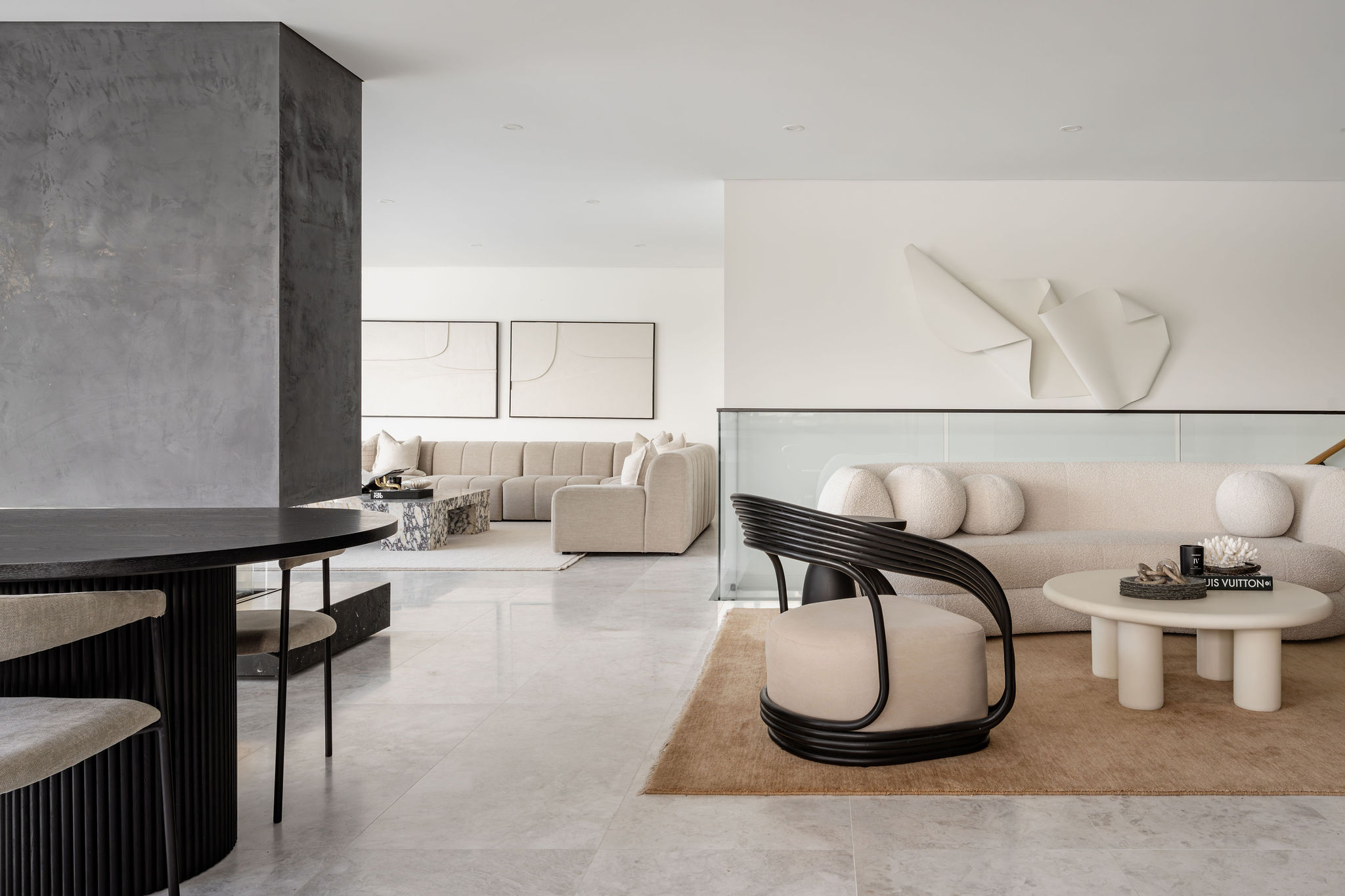
In high-end residential interiors, furniture placement is frequently treated as a secondary consideration, yet it functions as one of the most powerful languages of design. Beyond aesthetics, the positioning of sofas, chairs, tables, and storage elements communicates how a space is intended to be used, guides movement, and subtly directs attention. In my professional experience, first-time homeowners and renovation clients often focus excessively on individual pieces or finishes, overlooking how spatial relationships and furniture orchestration influence both function and emotional response.
Prioritizing Circulation
Effective placement always begins with circulation. Clear, intuitive pathways allow residents to move effortlessly throughout a space without conscious thought, reducing stress and improving daily usability. In luxury interiors, this principle is especially important, as oversized or statement furniture can disrupt movement, creating tension between visual appeal and functionality. A 2024 Interior Design Ergonomics Study found that homes with circulation widths below 900 mm in primary pathways reported a 37% decrease in user comfort and increased frustration during routine activities.
In practice, circulation planning involves mapping primary and secondary routes before selecting or positioning furniture. In one luxury penthouse project, we initially had a dramatic sectional sofa and large accent chairs placed according to aesthetic symmetry. Residents found that moving between seating, storage, and entryways required awkward detours. By repositioning the sofa slightly, angling chairs to maintain sightlines, and leaving generous spacing around focal furniture, we restored intuitive movement. The space felt immediately lighter and more comfortable, demonstrating that circulation planning is as critical as material selection or finish quality.
Furniture Grouping and Social Dynamics
Beyond circulation, furniture arrangement defines social interaction. Seating clusters determine whether a living room encourages conversation, casual relaxation, or formal presentation. For example, arranging chairs to face each other around a coffee table promotes dialogue and intimacy, whereas long, linear configurations can feel rigid and formal. In high-end residential interiors, flexibility is paramount. Residents may require the same space to accommodate quiet solitary activities in the morning and social gatherings in the evening.
One client’s living room initially featured a linear sofa paired with side chairs facing away from the central seating area. Despite high-quality furnishings, residents rarely used the space for conversation, preferring smaller nooks elsewhere. After redesigning the layout to create circular and semi-circular seating clusters, the room became a hub for interaction and relaxation. This adjustment demonstrates how thoughtful grouping enhances both usability and emotional comfort, reinforcing the trust that clients place in professional design guidance.
The Importance of Negative Space
Negative space—the areas intentionally left empty—plays a critical role in high-end furniture placement. Empty space is not wasted; it provides visual relief, emphasizes key pieces, and enhances the perceived scale of a room. In my professional practice, I often advise clients to think of negative space as an invisible design material that interacts with light, furniture, and architectural features. Overcrowding furniture or over-layering textures can create visual noise, overwhelming both eye and mind. Conversely, well-considered gaps around key pieces—such as a sculptural dining table, a hand-finished console, or an iconic lounge chair—highlight craftsmanship, proportion, and presence.
In one renovation project, a large open-plan living and dining area initially contained multiple side tables, decorative stools, and accent cabinets. The cumulative effect was visual clutter, and residents reported feeling confined despite the generous square footage. By selectively removing nonessential furniture and emphasizing negative space around central pieces, the environment became breathable, calming, and more functional. Visitors consistently commented on the sense of effortless elegance and clarity, illustrating how spatial restraint communicates authority in design.
Human Behavior and Experience-Driven Placement
Furniture placement should reflect human behavior, not merely aesthetics. Successful luxury interiors anticipate how occupants interact with their environment, incorporating ergonomics, line of sight, and functional zones. For example, positioning lounge chairs near windows with optimal lighting encourages reading, while maintaining unobstructed pathways ensures children and pets can move safely. Circulation, comfort, and accessibility must be integrated seamlessly, with each placement decision justified by experiential reasoning rather than visual preference alone.
Experience-driven placement also considers temporal changes. Multi-purpose rooms, frequently used for work, leisure, or socializing, benefit from furniture arrangements that adapt easily. Modular sofas, lightweight accent chairs, or rolling tables can accommodate evolving routines without compromising design integrity. In one client project, movable seating allowed the same room to function as a casual family area during the day and an elegant entertaining space at night. Thoughtful placement decisions facilitated these transitions, reinforcing both practical value and aesthetic coherence.
Layering Furniture and Hierarchical Clarity
High-end interiors achieve authority and trust through hierarchical clarity. Placement should communicate which furniture is central, which is supportive, and which serves functional or decorative roles. Hierarchy is established through spatial relationships, sightlines, and proportional emphasis. For example, a dining table of exceptional craftsmanship occupies the visual center of a dining room, supported by chairs and sideboards arranged to complement without competing. In contrast, placing multiple statement pieces at equal visual weight creates confusion and diminishes perceived value.
In a recent luxury apartment project, I guided clients to designate primary, secondary, and tertiary furniture elements. The largest sofa anchored the living room, accent chairs created conversational clusters, and smaller decorative items were positioned with ample spacing. This hierarchical clarity allowed each piece to be appreciated individually while contributing to a coherent whole, emphasizing refined taste and professional authority.
Emotional and Psychological Benefits
Proper furniture placement impacts emotional well-being. Spaces designed for movement, social interaction, and visual clarity encourage relaxation and engagement. Residents experience a subconscious sense of order, reducing stress and enhancing satisfaction. In contrast, poorly arranged rooms—even with expensive furniture—can evoke tension, discomfort, or underutilization. In my practice, I consistently observe that clients who embrace deliberate, experience-based placement report increased enjoyment, daily comfort, and emotional attachment to their interiors.
Moreover, furniture placement influences perceived luxury. A room where movement is intuitive, focal points are clear, and interactions are facilitated demonstrates sophistication beyond material or aesthetic choices. Luxury is communicated not only through finishes or brand recognition but through an environment that feels effortless, functional, and emotionally resonant.
Integrating Lighting, Materials, and Spatial Flow
Furniture placement must be considered alongside lighting and materials to create harmonious interiors. Sightlines to windows, natural light, or feature elements are maximized through strategic arrangement. Textures and finishes interact with light differently depending on placement, influencing both perception and mood. For instance, a leather lounge chair positioned to catch morning sunlight will reveal patina and grain, reinforcing tactile richness and material calm. Similarly, reflective surfaces should be oriented to avoid glare and visual tension, while matte finishes provide subtle visual balance.
In one high-end residence, repositioning a series of modular seating elements in conjunction with layered ambient and task lighting created a living area that adapted fluidly from daytime family use to evening entertaining. Each piece contributed to a dynamic yet coherent spatial experience, highlighting how placement decisions enhance functionality, aesthetic appeal, and emotional impact.
Conclusion
Ultimately, furniture placement in luxury residential interiors is far more than decoration—it is structure, narrative, and function combined. Thoughtful placement transforms high-end furniture from visually impressive objects into elements of a living, adaptive environment. By prioritizing circulation, social dynamics, negative space, hierarchy, human behavior, and material interaction, designers create interiors that are intuitive, comfortable, and emotionally engaging.
Placement decisions reflect professional experience, expertise, and authority, demonstrating an understanding of both the physical and psychological needs of residents. When executed with discipline and insight, furniture placement ensures that luxury interiors are not only visually refined but deeply livable, resilient to lifestyle changes, and emotionally satisfying over decades. High-end interiors designed with deliberate, experience-driven placement communicate subtle confidence, enduring taste, and a profound understanding of the intersection between human behavior and environmental design.