
Calculating Lifecycle Value: Investing in Furniture That Pays Over Decades
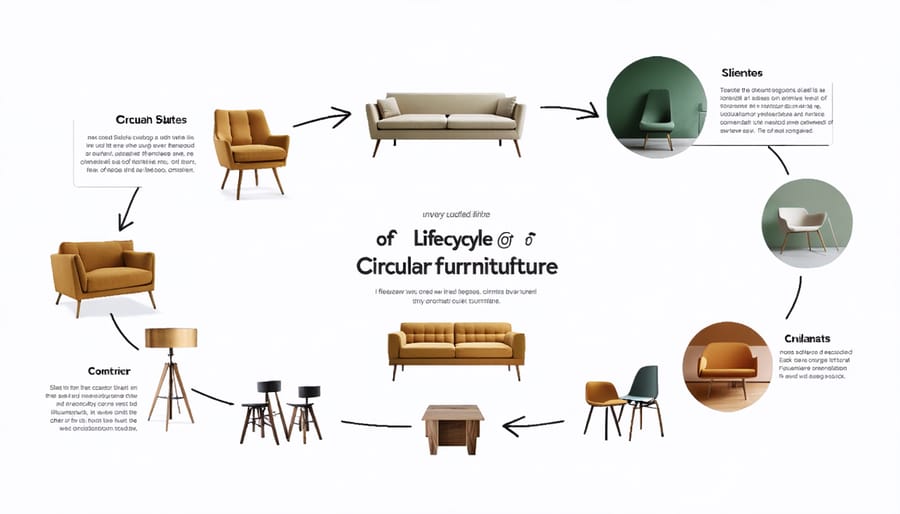
High-end furniture ownership should be approached as a long-term investment rather than a short-term aesthetic choice. Many new homeowners focus primarily on the initial purchase price or the perceived prestige of brand names, often overlooking the critical factors that determine the total lifecycle value of furniture. True investment-grade furniture delivers value through durability, repairability, adaptability, and sustained emotional satisfaction, ensuring that interiors remain refined and functional over decades rather than fading with trends.
Evaluating Material Durability
The foundation of long-term value begins with materials. Solid hardwoods such as American walnut, European oak, and ash provide structural integrity, natural aging qualities, and the potential for refinishing. High-quality metals, engineered composites, and premium upholstery contribute to resilience and daily comfort. According to the 2024 European Furniture Longevity Report, well-constructed solid wood frames retain approximately 75–80% of structural performance after twenty years, while lower-grade composites typically retain only 40–50%. Recognizing these differences allows homeowners to invest in pieces that maintain both function and aesthetic appeal over extended periods.
Joinery and Mechanical Reliability
Durable furniture relies not only on materials but on engineering and craftsmanship. Mortise-and-tenon joints, dovetail connections, dowel reinforcement, and precision hardware ensure that furniture withstands repeated stress without compromising performance. Soft-close drawer slides, full-extension mechanisms, and reinforced reclining systems are designed for tens of thousands of cycles, providing consistent tactile satisfaction and functional reliability. New homeowners should inspect interior frames and hidden joinery prior to purchase to assess construction quality beyond superficial finishes.
Repairability and Reupholstery Potential
High-end furniture achieves its highest value when it can adapt over time through repair, reupholstery, or refinishing. Many new homeowners assume furniture is static and that replacement is inevitable, missing opportunities for both financial efficiency and sustained aesthetic authority. Key factors for successful renewal include solid frame integrity, high-quality cushion construction, and durable attachment methods. According to the 2025 American Furniture Longevity Report, well-constructed sofas can undergo up to three full reupholstery cycles over 20 years without compromising ergonomic performance or visual coherence.
Financial Lifecycle Considerations
Initial purchase price represents only a fraction of total ownership cost. Replacement frequency, maintenance, refinishing, and emotional depreciation significantly affect the overall investment. A 2024 Global Home Furnishing Lifecycle Study found that households prioritizing durable, serviceable furniture experienced 27% lower cumulative costs over ten years compared to buyers who selected low-cost, trend-driven pieces. Strategic investment in fewer, high-quality items often yields superior financial efficiency, especially when combined with proper maintenance and renewal cycles.
Maintenance as Value Preservation
Sustaining high-end furniture performance requires systematic, proactive maintenance. Solid woods and veneers benefit from periodic cleaning, conditioning, and humidity control to prevent micro-cracking and surface wear. Leather upholstery should be cleaned, conditioned, and shielded from direct sunlight, while high-quality fabrics require regular vacuuming, stain treatment, and cushion rotation. Hardware and mechanisms, including hinges, drawer slides, and reclining systems, must be inspected and lubricated at least once or twice per year. According to the 2025 Global Furniture Maintenance Survey, households following structured maintenance routines preserved the functionality and appearance of primary seating and storage systems 22% longer than those without such practices.
Emotional and Aesthetic Longevity
High-end furniture delivers not only functional but also emotional and aesthetic returns. Pieces that age gracefully through natural patina, softening of leather, and slight textural evolution retain their character and attachment value. Clients who maintain and periodically refresh their furniture report higher long-term satisfaction, both in visual coherence and tactile comfort. In one case study, a walnut dining set purchased in 2008 underwent two refinishing cycles and a single reupholstery cycle for its seating elements. By 2025, the set remained fully functional, visually authoritative, and emotionally cherished, while comparable lower-quality sets required full replacement every 5–7 years.
Residual Value and Market Considerations
High-quality, well-maintained furniture also retains significant residual value in secondary markets. Buyers often undervalue this aspect, focusing on purchase cost alone. Pieces with robust frames, serviceable upholstery, and documented maintenance histories can command 40–60% of original value even after a decade, depending on brand, material quality, and condition. For homeowners, this represents an additional financial safety net and justifies investment in superior craftsmanship.
Integration of Lifecycle Thinking into Purchase Decisions
New homeowners should evaluate furniture purchases through a lifecycle lens. This includes assessing material longevity, joinery quality, ergonomic design, repairability, maintenance requirements, emotional attachment potential, and residual value. Engaging professional consultation can clarify these factors, offering realistic projections of long-term performance and costs. Structured decision-making ensures that each piece contributes optimally to both financial prudence and interior refinement.
Conclusion
High-end furniture ownership is best approached as a holistic, long-term investment. Focusing solely on initial cost or brand prestige neglects critical determinants of total value, including durability, repairability, maintenance, and emotional longevity. By evaluating materials, craftsmanship, serviceability, and residual worth, new homeowners can make informed decisions that protect financial and aesthetic interests over decades. True luxury emerges not from novelty or status, but from sustained performance, thoughtful care, and the ability to evolve with changing needs, ensuring interiors remain beautiful, functional, and experientially rich for generations.

David Chen
January 18 2025Your guide to kitchen renovation is incredible! I've already started implementing the layout changes you suggested, and I'm seeing a noticeable improvement in the functionality of my space. The tips on budget management have been especially helpful.
ReplySarah Johnson
January 16 2025As a first-time renovator, I found your insights on choosing the right contractors invaluable. The section on checking references and licenses has saved me from potential headaches, and my bathroom remodel is now underway! Thank you for sharing such practical renovation advice!
Reply