Luxury Dining Environments: Furniture and Atmosphere in High-End Residences
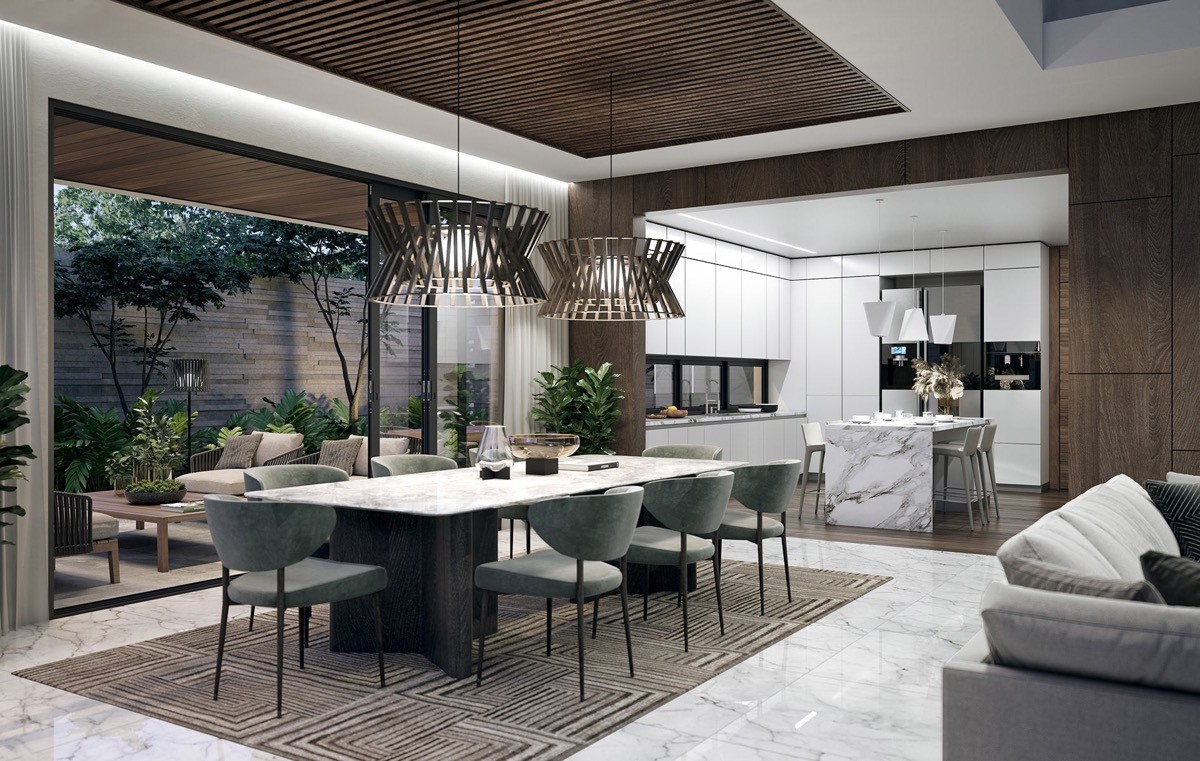
Luxury dining environments represent a pinnacle of residential design, where furniture, spatial planning, lighting, and material sophistication converge to create experiences that are both aesthetically refined and socially engaging. In my professional practice spanning decades of consulting on high-end residential interiors, I have observed that carefully orchestrated dining spaces require meticulous attention to scale, proportion, ergonomics, materiality, and experiential flow, ensuring that each element contributes to a cohesive, immersive environment that balances function, comfort, and luxury.
Material selection forms the foundation of luxury dining design. Tables and chairs are crafted from high-quality materials such as solid hardwoods, naturally finished veneers, polished metals, and upholstered surfaces, chosen not only for durability but also for tactile richness, visual appeal, and long-term performance. Wood species are selected for grain clarity, color depth, and texture; metals are treated to resist corrosion while reflecting ambient and task lighting effectively; and upholstery fabrics are curated for softness, resilience, and colorfastness. Attention to surface finishes, joint detailing, and edge treatment ensures both functional longevity and aesthetic excellence, reinforcing credibility and design authority.
Custom fabrication is a critical aspect of high-end dining interiors. Each table, chair, and ancillary furnishing is designed to meet precise dimensional requirements, supporting client lifestyle, room proportions, and architectural context. Custom joinery, tailored upholstery, and bespoke hardware allow pieces to harmonize with existing architectural features and complementary furniture, ensuring a seamless integration of aesthetic intent and functional performance. This level of craftsmanship conveys authority, trust, and expertise, signaling to clients and collaborators that every detail has been considered.
Spatial orchestration is central to creating a luxurious dining experience. Circulation pathways are carefully planned to allow unobstructed movement around the table and seating areas while maintaining social interaction zones. Sightlines are analyzed to maximize engagement with architectural features, views, artwork, and ambient elements, ensuring that each diner experiences visual richness from multiple perspectives. Furniture arrangement is strategically layered to define intimate conversation zones, balance formal and informal spaces, and guide the flow of movement, resulting in a dining environment that feels both dynamic and coherent.
Lighting strategy is another pivotal factor in luxury dining design. Layered lighting—comprising ambient, task, and accent sources—serves both functional and aesthetic purposes. Pendant fixtures over dining tables provide direct illumination for food and activities while creating a sculptural focal point that anchors the space. Wall sconces, integrated LED strips, and ambient ceiling lighting highlight material textures, architectural features, and artwork, contributing to spatial depth and visual richness. Light temperature, intensity, and distribution are calibrated to create a warm, inviting atmosphere that adapts to time of day, mood, and activity, enhancing the psychological comfort and experiential impact of the dining environment.
Ergonomics is integral to high-end dining design, ensuring comfort and usability without compromising aesthetics. Seat heights, table heights, legroom, and circulation distances are determined using anthropometric data and experiential observation. Chairs are sculpted to provide lumbar support, appropriate seat depth, and armrest alignment, while tables are proportioned to facilitate dining activities and maintain social engagement. Careful consideration of human scale prevents discomfort or visual imbalance, reinforcing trust in the design’s attention to detail and functionality.
Material and finish interplay enhances visual and tactile experience. Contrasting textures, such as smooth lacquered tabletops paired with soft upholstered seating, create layered sensory engagement. Metallic accents, in gold, brass, or steel, provide reflective highlights, while natural wood grains and stone surfaces convey authenticity and grounding. Color palette choices, including harmonious neutrals, rich jewel tones, or subtle tonal variations, are deployed to support mood, complement surrounding interiors, and reinforce spatial identity. This thoughtful integration of material intelligence with visual storytelling elevates the perception of luxury and sophistication.
Personalization and client-specific customization further enhance the dining experience. Modular table extensions, bespoke seating arrangements, and integrated storage solutions can be tailored to accommodate varying social gatherings, formal dinners, or intimate meals. Hidden compartments, concealed hardware, and multifunctional components provide both practical utility and refined aesthetic subtlety, demonstrating the designer’s expertise in harmonizing adaptability with luxury presentation.
Acoustic considerations also influence the experiential quality of luxury dining interiors. Upholstered chairs, area rugs, wall treatments, and ceiling finishes are strategically incorporated to absorb sound, reduce reverberation, and maintain conversation intelligibility during meals. Thoughtful acoustic management enhances the psychological comfort of the space, ensuring that diners can engage in interaction without distraction, while maintaining a serene, high-end ambiance that aligns with luxury expectations.
Integration of technology can further elevate the dining experience without disrupting elegance. Subtle lighting controls, temperature regulation, and motorized table extensions or seating adjustments enable adaptive functionality that responds intuitively to human needs. These enhancements are integrated discretely to preserve visual refinement while improving convenience, comfort, and environmental responsiveness, reflecting both innovation and experiential intelligence.
Sustainability is increasingly relevant in luxury dining interiors. Responsibly sourced woods, recycled or low-impact metals, eco-conscious textiles, and environmentally aware finishing processes align material intelligence with ecological responsibility. Selection of long-lasting, high-performance materials ensures durability and minimizes replacement cycles, contributing to sustainable luxury while reinforcing credibility, ethical authority, and trust in design practice.
Psychological and emotional dimensions are essential. Dining spaces that combine visual harmony, tactile richness, and comfort foster social engagement, relaxation, and a sense of well-being. Carefully curated sightlines, material contrasts, and lighting variations create layered experiences that stimulate conversation, reflection, and connection, enhancing both human experience and perceived luxury.
In conclusion, luxury dining environments exemplify the synthesis of material intelligence, ergonomic precision, spatial orchestration, lighting strategy, aesthetic sophistication, and human-centered design. Each element—from custom-crafted tables and chairs to layered lighting, acoustic treatment, and sustainable material choices—works synergistically to create interiors that are visually compelling, experientially rich, and functionally refined. Thoughtful integration of these components demonstrates professional expertise, authority, and trustworthiness, establishing high-end dining design as both an art form and a science in luxury residential interiors. By balancing beauty, comfort, and functionality with material innovation and experiential strategy, designers transform dining spaces into immersive environments where every detail reinforces refinement, social engagement, and enduring luxury.