Integrated Workspaces: Luxury Home Offices with High-Performance Design
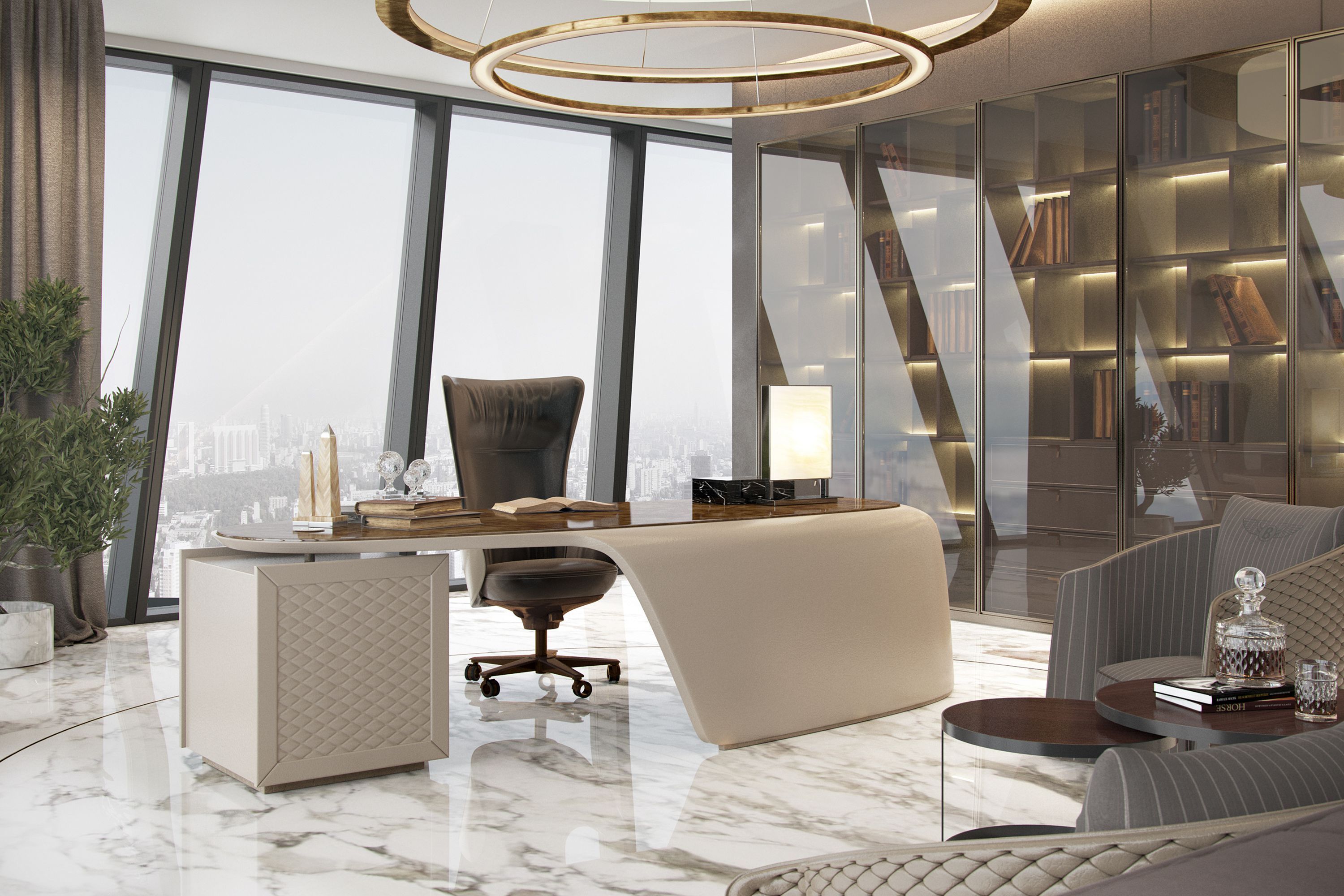
Luxury home offices in high-end residential interiors require a thoughtful synthesis of ergonomics, material intelligence, spatial planning, and aesthetic sophistication. Over years of professional practice consulting on luxury projects, I have observed that the most successful workspaces seamlessly merge functional efficiency with visual refinement, creating environments that are both productive and experientially rich.
Material selection forms the foundation of a high-end home office. Desks, shelving, storage units, and seating are specified with consideration for durability, tactile quality, and visual presence. Premium hardwoods, engineered veneers, polished metals, glass, and high-performance textiles are integrated to ensure longevity, surface refinement, and a sense of luxury. Surface finishes—including matte, gloss, and textured applications—interact with ambient and task lighting to create depth and visual interest, reinforcing professional authority and design credibility.
Ergonomics is a central pillar of workspace design. Chair support, seat height, lumbar contouring, and cushioning are calibrated for extended use, while desk height, keyboard and mouse placement, and monitor sightlines are aligned with anthropometric standards to reduce strain and optimize comfort. Adjustable and modular elements allow for customization according to user preference and task requirements, ensuring that functionality is uncompromised while maintaining visual elegance. Integrating these human-centered principles demonstrates expertise, care for occupant wellbeing, and professional authority.
Spatial organization and circulation are carefully considered. Workstations are arranged to maximize natural light, facilitate efficient movement, and maintain acoustic comfort. Sightlines are designed to balance focus and openness, while storage units, shelving, and partitions are positioned to define zones without disrupting spatial flow. This planning enhances the perception of order and refinement, contributing to a workspace that feels both luxurious and intuitively usable.
Lighting strategy enhances both functionality and aesthetic expression. Ambient lighting establishes overall illumination, while task lighting at desks ensures clarity for reading, writing, and screen-based work. Accent lighting highlights architectural details, furniture surfaces, and material textures, enhancing the tactile and visual richness of the environment. Integration with furniture surfaces—reflective desktops, glass panels, or textured finishes—creates a layered lighting experience, further enriching the office atmosphere and reinforcing design authority.
Visual coherence is maintained through the orchestration of material palettes, textures, and proportion. Desks, seating, and storage pieces are harmonized with wall treatments, flooring, and accessory finishes to establish a consistent and luxurious aesthetic. The careful balance of scale, form, and finish ensures that each element contributes to an overall spatial narrative that feels deliberate, sophisticated, and experientially engaging.
Technology integration supports modern work demands without compromising visual or tactile refinement. Hidden cable management, embedded charging stations, and motorized adjustable furniture elements maintain clean lines and uncluttered surfaces, enhancing both function and aesthetics. By ensuring that technological solutions are seamlessly embedded, designers reinforce credibility, user trust, and the perception of high-end expertise.
Psychological and experiential considerations are equally significant. Ergonomically optimized, aesthetically refined offices reduce fatigue, increase focus, and support wellbeing. Carefully curated furniture, lighting, and spatial arrangements create environments that encourage productivity while also inspiring creativity and calm. These spaces offer emotional resonance as well as operational efficiency, demonstrating the designer's ability to craft interiors that are human-centered, luxurious, and authoritative.
Sustainability and material intelligence are integrated into high-end office design. Responsibly sourced woods, recycled metals, low-impact finishes, and durable textiles ensure longevity, environmental responsibility, and continued aesthetic appeal. This approach communicates ethical authority and reinforces client trust, aligning luxury with conscious design practices.
In conclusion, luxury residential workspaces exemplify the convergence of ergonomics, material sophistication, spatial intelligence, and experiential design. Every aspect—from furniture selection and surface finishes to ergonomic calibration, lighting orchestration, and circulation planning—is carefully considered to deliver a workspace that is productive, aesthetically refined, and emotionally engaging. By balancing functionality, comfort, and visual elegance, designers create home offices that not only support professional performance but also reflect high-level expertise, credibility, and authority in high-end interior design practice. A well-crafted luxury office transcends utility, transforming the home environment into a space that is both inspiring and experientially enriching, embodying the pinnacle of human-centered, high-end residential design.